
Your Book Description Is Killing Your Sales. Here's How To Fix It.
Most authors spend years perfecting their manuscript, only to fumble the 200 words that determine if anyone ever reads it. Your book could be a masterpiece, a game-changer, the next big thing, but if your book description sucks, it's dead on arrival. Period. You poured your soul onto the page, sweated through countless revisions, maybe even invested in professional editing or top-tier ghostwriting services, only to watch your masterpiece gather dust on a virtual shelf.
You see other authors with less talent, less grit, fewer great ideas, selling copies like hotcakes, while your sales rank plummets into oblivion. You stare at your Amazon page, heart sinking, wondering why nobody's clicking "Add to Cart." Is it your book cover? Is it your price? Or is it that beige, bland block of text masquerading as a publishing description, utterly failing to grab anyone by the throat and demand their attention?
The brutal truth? It’s probably the latter. Your book description isn't just a summary; it's your primary sales tool, your digital handshake with a potential reader, and if it's not potent, persuasive, and packed with punch, you’re leaving money on the table. It’s not enough to be a great writer; you need to be a damn good salesperson, especially when it comes to book blurb writing and crafting compelling sales copy for authors.
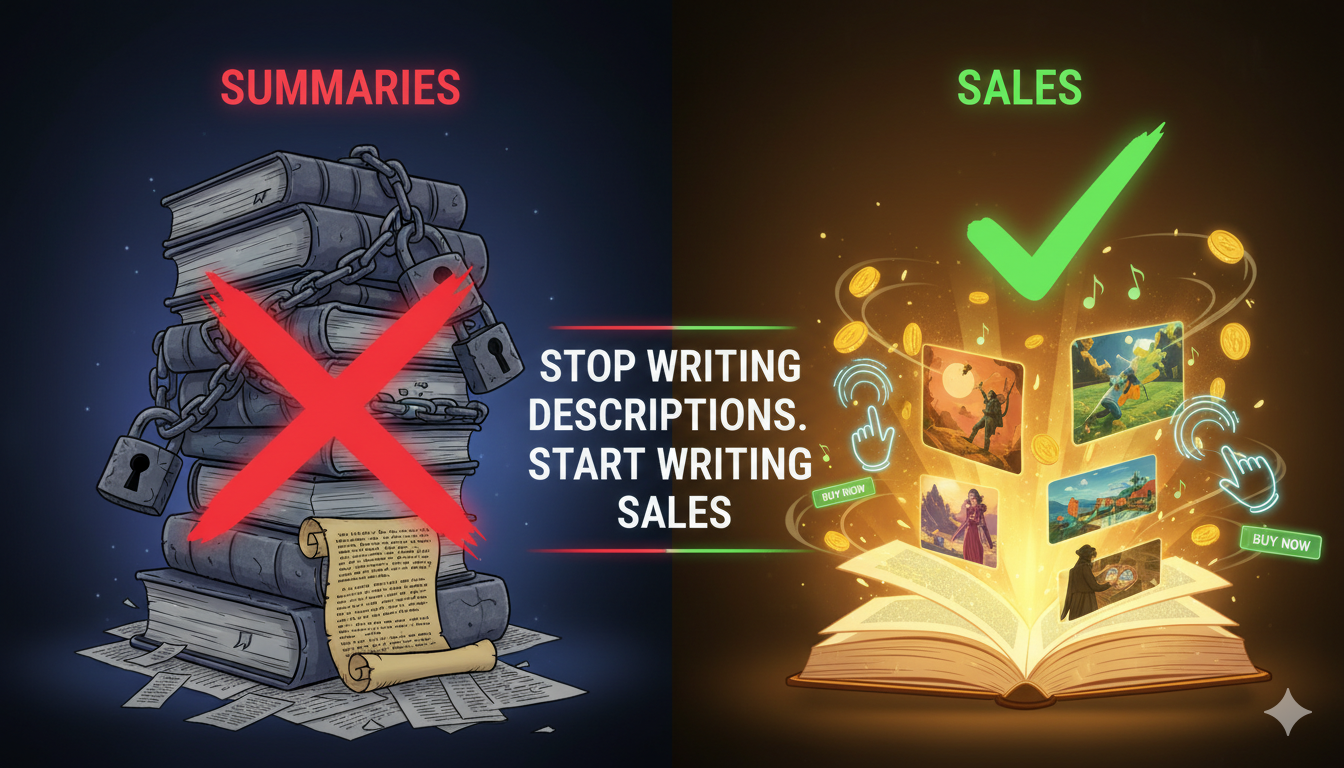
Stop Writing Summaries. Start Writing Sales.
At Macspire, we don't just help you write books; we help you sell them. We understand that your book description isn't a plot recap for your English teacher. It's a short, sharp, psychological weapon designed to convert browsers into buyers. Here’s how we approach it:
- The Gut Punch Opening: Forget polite introductions. Your first sentence must shatter expectations and create an immediate sense of urgency or intrigue. Ask a provocative question, present a stark dilemma, or hint at a terrifying secret. Hook them instantly.
- Twist the Knife of Conflict: What's at stake? Who is your protagonist, and what seemingly insurmountable problem do they face? Readers crave conflict, tension, and a clear understanding of the emotional battlefield. Don't just tell them; make them feel the pressure.
- Show, Don't Tell – Emotion, Not Event: Instead of saying "he was sad," show the weight of the world on his shoulders. Focus on the emotional journey, the internal struggles, and the character's desires, not just a dry recounting of events.
- The Inevitable Consequence: What happens if your character fails? What's the cost of inaction? Paint a vivid picture of the potential disaster or loss. This creates a powerful desire for the reader to find out if they succeed.
- The Irresistible Call to Action (Implicit): Your description should build such intense curiosity and desire that the reader feels compelled to click "Buy Now." End with a cliffhanger or a powerful question that can only be answered by opening your book.
This isn't just writing; it's strategic marketing. It's understanding human psychology and leveraging it to make your book irresistible. Whether it’s optimising your Amazon Ads or fuelling your BookTok marketing, a powerful description is the foundational block that makes all other efforts worthwhile. Stop treating your book description as an afterthought. It's a deal-breaker.
FAQ Section
How long should my book description be?
Aim for 150-250 words. It needs to be long enough to build intrigue and tension, but short enough to avoid overwhelming the reader or giving away too much. Brevity with impact is key.
Should I use keywords in my book description?
Yes, absolutely. Integrate relevant keywords naturally to help with search visibility on platforms like Amazon. However, never sacrifice readability or sales appeal for keyword stuffing. The primary goal is conversion.
What's the biggest mistake authors make with their book descriptions?
The biggest mistake is writing a bland plot summary instead of compelling sales copy. They focus on what happens instead of why it matters, what's at stake, and how it will make the reader feel. No intrigue, no sales.
Stop Playing Small With Your Legacy.
Most authors fail because they can't bridge the gap between "writer" and "bestseller." We've launched 250+ authors and generated $400k in 90 days. Stop guessing.
[BOOK YOUR STRATEGY CALL – CLICK HERE]